Metal Buildup in Hair Extensions: The Silent Bond Failure Most Stylists Miss
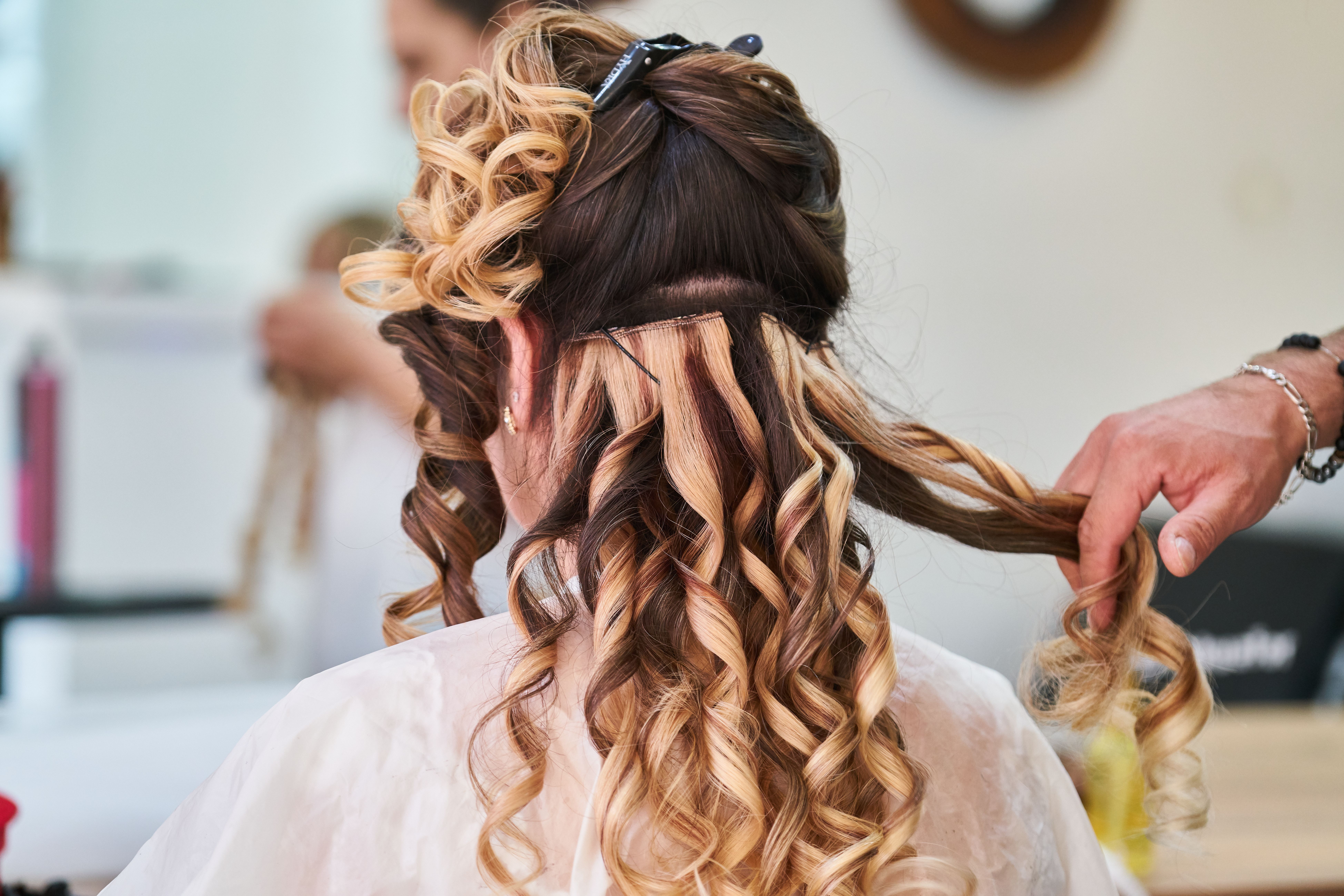
Metal Buildup in Hair Extensions: The Silent Bond Failure Most Stylists Miss
Metal buildup is responsible for a category of extension failure that gets misdiagnosed as product quality issues approximately 80 percent of the time. The bond lifts, the tape loses adhesion, the weft slips at six weeks instead of twelve — and the stylist concludes the hair is low grade. In many cases the hair is fine. The problem is the client's shower.
What Metal Buildup Actually Is (and Why It Accumulates Faster on Extensions)
Hard water contains dissolved calcium, magnesium, copper, and iron. These minerals don't rinse out — they bond to the hair shaft's negatively charged surface, accumulating with every wash. Over time they create a film that coats both the cortex and cuticle, raising porosity unevenly and interfering with any adhesive or mechanical attachment that makes contact with the shaft.
Extension hair is more vulnerable than natural hair for a structural reason: the cuticle on processed Remy hair is already partially smoothed or aligned in a single direction, which means it presents more surface area to incoming minerals than undisturbed cuticle scales. A client who has lived in Phoenix or Las Vegas — cities with some of the hardest municipal water in the United States, typically 200-400 ppm total dissolved solids — can accumulate detectable mineral deposits in as few as four to six weeks of regular washing.
The adhesive failure mechanism works differently depending on extension method:
- Keratin bonds: Mineral film creates a release layer between the bond and the hair shaft. The bond appears intact but has lost mechanical grip. It slides rather than snaps when tested.
- Tape-ins: Calcium deposits make the tape adhesive less sticky; the tape may appear clean on removal but re-adhesion to the same section fails even with fresh tape.
- Hand-tied wefts: Bond adhesion isn't a factor, but copper and iron deposits cause visible color shifts — warm brassy tones appearing on light blonde extension hair regardless of the client's color history.
Diagnosing Metal Buildup Before an Install: The Strand Test Stylists Are Skipping
A Malibu C treatment report published in their practitioner documentation notes that up to 65 percent of extension clients who present with "recurring slip or lift" have detectable mineral deposits on strand analysis. The number would likely be higher if strand testing were a standard intake step — in practice, it is rarely performed.
The diagnostic sequence most extension specialists now use:
- Take three strands from different scalp zones — nape, crown, temple.
- Rub a damp white cloth down each strand. Yellow or orange residue indicates iron. Gray or white powder indicates calcium or magnesium.
- If any zone tests positive, perform a chelating treatment before the install, not after.
The timing matters. A chelating treatment applied to already-installed extension hair can temporarily soften some keratin bond adhesives and reduce tape tack. Done before the install on natural hair only, it clears the deposit layer and gives the adhesive a clean surface. The window for best adhesion is approximately 48-72 hours post-treatment — after the hair's pH has re-stabilized but before new mineral exposure from washing.
The Hard Water Geography Problem: Which Clients Are at Highest Risk
The United States Geological Survey's 2009 water hardness map — still the most widely cited reference in trichology literature — classifies over 85 percent of the contiguous US landmass as having moderate to very hard water. The Northeast and Pacific Northwest have softer water; the Southwest, Midwest, and most of the South do not.
As a practical intake question: "Do you have a water softener at home?" is one of the most predictive screening questions an extension stylist can ask. A client in Dallas without a water softener who washes her hair daily is on a different maintenance schedule than a client in Portland on the same wash frequency. The Dallas client likely needs a chelating treatment every 8-10 weeks; the Portland client may never need one.
Copper contamination is a separate problem from calcium hardness and deserves its own mention. Copper pipes, pool exposure, and certain well water supplies deliver copper ions that bond tenaciously to bleached or porous hair. Copper deposits turn extension hair distinctly green-bronze over time and are not removed by standard clarifying shampoos — they require a dedicated metal purifying treatment (Malibu C Crystal Gel and Olaplex No. 4P are the two most-used in professional settings). Cost to the client: $40-$80 retail per treatment cycle.
Chelating vs. Clarifying: Why the Distinction Matters for Extension Stylists
A clarifying shampoo removes product buildup — silicones, polymers, heavy conditioners. It does not remove mineral deposits. The distinction is frequently lost in client consultations, where "clarifying" is used as a catch-all term for a deep cleanse.
Chelating agents (EDTA, citric acid, phytic acid) work by chemically binding to metal ions and pulling them off the hair shaft. No clarifying shampoo achieves this. The most widely used professional chelating products for extension clients are Malibu C Hard Water Wellness Treatment, Kevin Murphy Maxi.Wash, and Joico Clarifying Shampoo (which, despite its name, contains chelating agents alongside standard surfactants).
Some extension specialists have started recommending weekly use of a diluted citric acid rinse (one teaspoon in 32oz water) as a between-appointment maintenance step for hard water clients. The data on this approach is anecdotal but directionally positive — it reduces the severity of mineral accumulation between in-salon treatments without stripping color or drying the hair significantly.
What to Recommend at the Removal Appointment
Extension removal is the most underutilized diagnostic moment in the client relationship. When pulling tape sections or sliding bonds off, a trained eye can see mineral buildup as a chalky white residue on the removed adhesive and on the natural hair strand below the attachment. This is the moment to show the client what's happening, explain the mechanism, and recommend a pre-install chelating protocol for the next set.
Some extension stylists have built this into their service pricing as a removal-and-prep package — the chelating treatment is included in the removal appointment fee at an additional $35-$60, ensuring the client's hair is ready for the reinstall without a separate scheduling step. Retention improves, rebooking improves, and the conversation about product maintenance becomes easier when the client can see the mineral residue herself.
FAQ: Metal Buildup and Hair Extensions
What is metal buildup in hair and how does it affect extensions?
Metal buildup refers to accumulated deposits of calcium, magnesium, iron, and copper from hard water, pool exposure, or mineral-rich well water. These deposits coat the hair shaft and interfere with extension adhesive bond strength, cause unexpected color shifts on light extension hair, and increase the porosity and brittleness of both natural and extension hair over time.
What chelating shampoo should I recommend for extension clients?
Malibu C Hard Water Wellness Treatment is the most widely used professional option because it's a concentrated packet formulation that allows controlled use rather than daily washing with a chelating agent. For clients who prefer a regular shampoo format, Kevin Murphy Maxi.Wash and Kenra Platinum Silkening Mist used pre-shampoo are both well-regarded in extension circles. Avoid recommending chelating products more than once a week for clients on color-treated extension hair — overuse dries the cuticle and accelerates color fade.
Can mineral buildup cause extension hair to turn brassy or discolored?
Yes. Iron deposits cause warm brassy tones on light blonde extension hair that are often mistaken for oxidation or toner fade. Copper turns extension hair green-bronze. Both color shifts are mineral-driven, not color chemistry problems. A metal purifying treatment resolves them; a toner does not, because the mineral coating under the toner will simply push through again within two to three washes.
How do I know if my client has hard water at home?
Ask directly — most clients know if they have calcium deposits on their faucets or shower glass. For a more clinical assessment, a water hardness test strip (available from hardware stores for $5-$12) can confirm the exact ppm and give you a documented baseline for client conversations. Above 120 ppm is considered hard; above 250 ppm is very hard and will likely cause visible extension problems without proactive chelating protocols.
Metal buildup is a solvable problem — but only if the diagnosis happens before the install, not after the client calls about slip at week six. The stylists building the most consistent extension retention rates are the ones who made mineral assessment a standard intake step.