Remy vs Non-Remy Hair Extensions: What Stylists Need to Know Before Buying
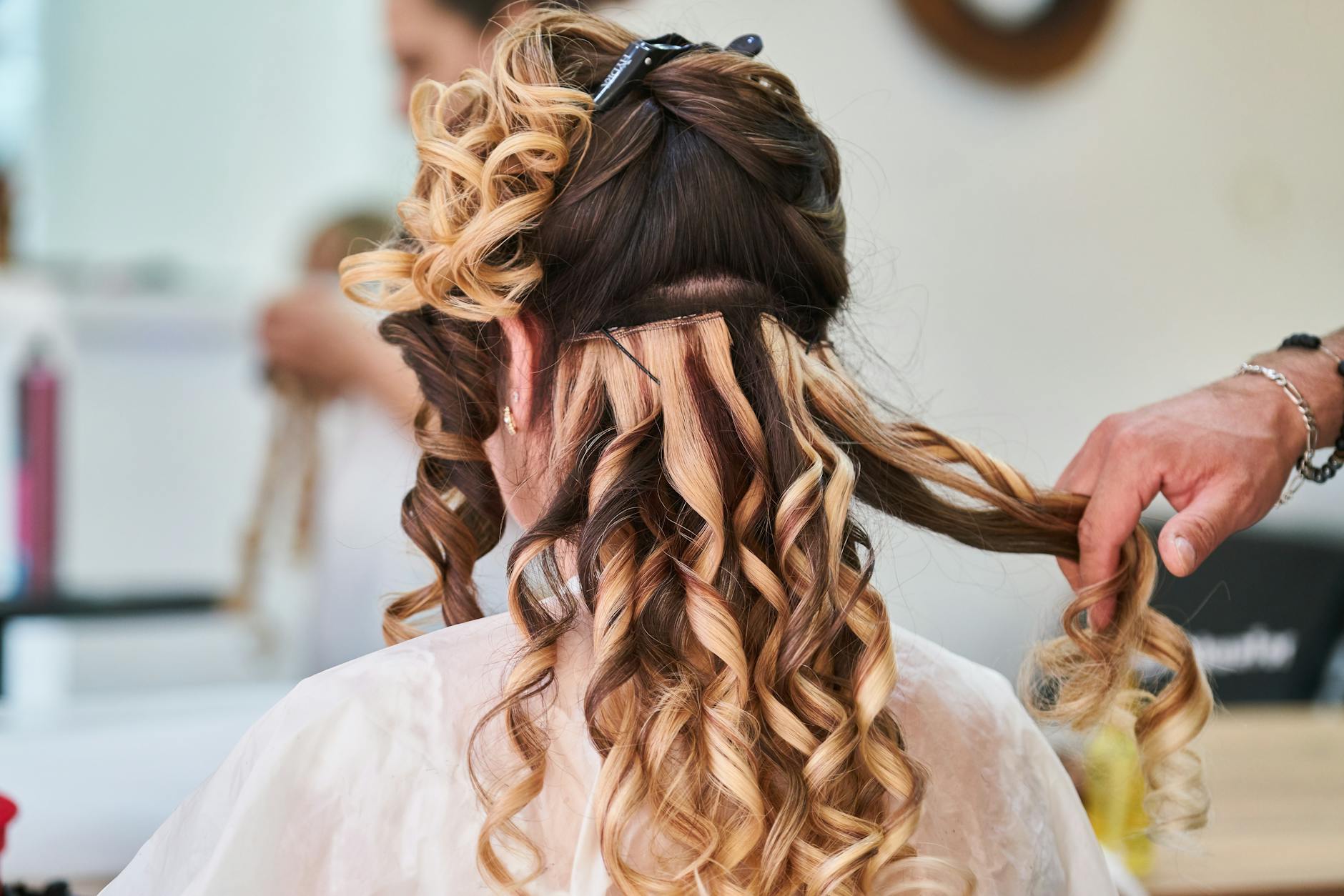
Remy vs Non-Remy Hair Extensions: What Stylists Need to Know Before Buying
The distinction between remy and non-remy hair extensions shapes client outcomes in ways that a price tag alone won't tell you. Extension specialists who have stocked both know the difference within two installs — in how the weft lays, how it holds color, and how clients return at 8 weeks. Here is what the distinction actually means at the product level, and where the marketing language obscures rather than informs.
| Remy Hair | Non-Remy Hair | |
|---|---|---|
| Cuticle alignment | Aligned root-to-tip | Mixed or stripped |
| Typical lifespan (with care) | 12-18 months | 3-6 months |
| Color uptake | Even, consistent | Patchy, variable |
| Tangling under heat | Low | High after first wash |
| Rebuy rate from clients | Higher | Lower |
What Remy Actually Means — and Where the Label Gets Misused
Remy refers specifically to cuticle alignment: all hairs in the bundle run root-to-tip in a single direction, preserving the natural cuticle layer. This single property explains most of the downstream performance differences. When cuticles face the same direction, they slide past each other rather than catching — which is why a properly sourced remy weft remains smooth through 12-18 months of professional use, while a non-remy weft begins tangling noticeably within 60-90 days.
The problem is that "remy" has become a broadly applied marketing term that is difficult to verify at the point of purchase. Extension specialists who have sourced from a range of suppliers report that mid-market product labeled as remy frequently does not meet strict cuticle-alignment standards when tested under magnification. The tell in the field: a weft that tangles within 2-3 weeks of install, particularly near the cut end, almost certainly has mixed cuticle direction regardless of what the label says. Silicone coating — which is applied post-production to smooth non-remy bundles — degrades after the first several washes and reveals the underlying cuticle behavior.
Non-Remy Hair: The Honest Case For and Against
Non-remy hair is collected from multiple sources with random cuticle direction. Manufacturers typically acid-wash non-remy hair to strip the cuticle layer entirely, then apply silicone to restore the initial smooth feel. The result is a product that presents well at first handling but deteriorates faster than remy alternatives.
The argument for non-remy in specific applications is legitimate but narrow. For high-turnover fantasy color installs where the client understands the hair is a consumable — balayage sessions producing extreme bleached ends, for instance — non-remy at a lower price point may suit the use case. For a client expecting to wear the same set for 12+ months and color it, the economics shift toward remy almost immediately. A non-remy set replaced twice annually often costs more than a remy set maintained properly over 18 months, before accounting for the stylist's additional install labor.
Single Drawn vs Double Drawn: A Distinct Dimension Stylists Conflate with Remy
Single drawn hair is collected at a range of lengths — a 20" bundle will include a significant proportion of hairs that are 14", 16", and 18". The weft thins toward the ends. Double drawn hair has been sorted to a consistent length, producing a blunt, full weft from root to tip. Both can be remy or non-remy — these are independent properties that are often marketed together but should be understood separately.
For tape-in and flat weft methods, single drawn hair shows visibly at the ends, particularly after the client's first few washes. Stylists who receive callbacks about "thin-looking ends" after an install are often working with single drawn product, regardless of remy status. Double drawn at the same length costs more because the sort process removes off-length hairs — a shorter bundle produces considerably more product from the same raw material. Extension specialists building a premium clientele typically stock double drawn exclusively, absorbing the cost differential into their pricing rather than explaining it on the service menu.
Cuticle-Aligned Hair: The Third Term Worth Understanding
Cuticle-aligned is technically a more precise descriptor than remy — it describes the same root-to-tip directionality but is applied specifically to single-donor or carefully collected multi-donor hair where not only is direction preserved but all strands originate from a consistent hair type. Some suppliers use remy and cuticle-aligned interchangeably; others reserve cuticle-aligned for their highest tier. The practical difference at the stylist level is in color uptake: cuticle-aligned hair from a consistent donor absorbs dye evenly across the weft, while blended-donor remy (still directionally aligned, but from many sources) may show subtle variation in lift and tone that becomes visible at lighter shades.
For stylists working in the platinum blonde and platinum silver space, donor consistency matters more than remy status alone. The color correction appointments that follow an inconsistent blonde lift rarely get traced back to hair sourcing, but experienced colorists recognize the pattern.
How to Evaluate a Supplier Before Stocking
Extension specialists who have navigated multiple supplier relationships consistently report three practical field tests. First, run your thumb down a small section of the weft from tip to root — if it feels significantly rougher than root-to-tip, cuticle alignment is partial at best. Second, examine 10-12 individual strands under magnification at the cut end: misaligned cuticles produce a visible ragged edge rather than a consistent flat cut. Third, request a water test — submerge a 6" section for 60 seconds and run your fingers through it wet. Non-remy hair tangles immediately at the ends; remy should remain smooth, though high porosity from processing will still cause some texture.
Some counterarguments to sourcing exclusively from premium remy suppliers deserve acknowledgment: for salons doing high-volume installs at accessible price points, the lower per-unit cost of non-remy enables client acquisition that a remy-only menu would foreclose. The trade-off is rebuy cadence, callback appointments, and the brand impression clients carry after the extensions degrade. These are genuinely different business models, and the right answer depends on the salon's positioning rather than a universal quality verdict.
Frequently Asked Questions
Can you tell remy from non-remy by looking at the packaging?
Rarely with confidence. Packaging claims are self-reported and not independently verified in the professional extension market. The most reliable indicator before purchase is supplier transparency about sourcing — a supplier who can describe their collection region, sorting process, and cuticle alignment testing is a more reliable signal than a label alone. Field testing a small sample before stocking a full supply is standard practice among experienced extension specialists.
Does remy hair hold color better than non-remy?
Yes, in most cases, particularly for toning, fashion shades, and significant lift. The intact cuticle layer on remy hair opens more evenly during color processing, which produces consistent deposit. Acid-washed non-remy hair has a degraded or absent cuticle layer that absorbs color unpredictably — the result is often correct immediately post-color but fades unevenly within 4-6 weeks. For stylists doing extension toning as part of their install service, this distinction directly affects how long the color result holds and how often clients return for toner refreshes.
What is the price difference between remy and non-remy hair?
Remy hair commands a substantial premium over non-remy at comparable lengths and weights — extension specialists consistently report the gap is significant enough that the price difference is visible across supplier categories even without seeing lab testing. The premium makes economic sense primarily when the client is expected to wear and maintain the set for 12+ months. For shorter-cycle installs or consumable-use cases, the calculation shifts depending on the service model and what the client understands they are purchasing.
Does single drawn or double drawn matter as much as remy status?
They solve different problems. Remy status determines tangling, smoothness, and color behavior over time. Single vs double drawn determines fullness at the ends and initial weft density. For a client with fine hair using tape-ins, double drawn remy is the strongest combination — it adds fullness where fine hair needs it most, and the cuticle alignment ensures longevity. For a client with thick, dense hair who wants length only, single drawn remy may blend naturally and cost less without visible quality compromise.