Micro Keratin Tip Extensions: The Lightest Bond Method and Who It Is For
Micro Keratin Tip Extensions: The Lightest Bond Method and Who It Is For
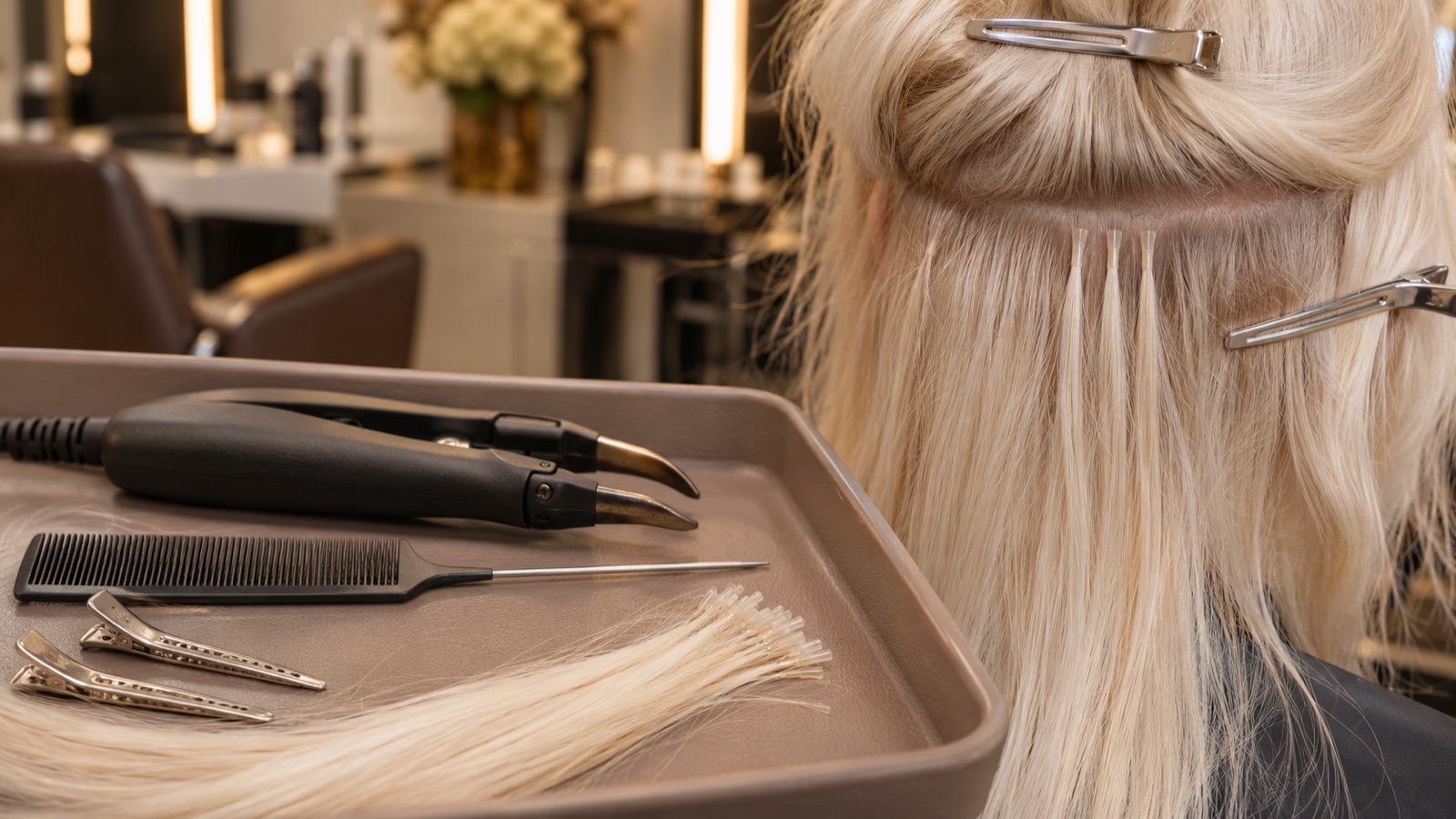
Stylists trained on standard k-tip extensions often encounter a wall when fine-haired clients walk in: the bond diameter, typically 4-5mm, creates visible lumps at the root and adds more weight than the natural hair can distribute. Micro keratin tip extensions address this by reducing the keratin bond to roughly 2-3mm, altering not just the aesthetics of the install but the mechanical load on the hair shaft itself. Adoption among extension specialists has climbed steadily since finer-gauge tools entered wider distribution around 2023, and the method now occupies a clear lane in the service menu: high-density looks on clients previously considered poor candidates for any bond-based extension system.
What Separates Micro-Tip Bonds from Standard K-Tips
The defining difference is the keratin bead diameter, not the hair quantity per strand. A standard k-tip bond typically carries 0.8-1.0 grams of hair and seats a 4-5mm keratin capsule; micro k-tip hair extensions reduce that capsule to 2-2.5mm while the strand weight drops to 0.5-0.6 grams. That mass reduction is the point. Extension specialists report that on fine hair with a diameter below 60 microns, standard bonds create a lever-arm effect: the weight of each strand concentrates stress at a single attachment point. The smaller bond distributes lateral force over a narrower footprint and sits flush against the scalp in a way wider capsules cannot.
There is also a fusion-tool distinction non-professionals rarely hear about: micro bonds require a narrower-tip fusion wand, typically 5-7mm, rather than the standard 10-12mm wand. Using the wrong wand melts the outer layer unevenly and leaves cold spots in the center of the bond, which is one of the leading causes of premature slippage at the four-week mark. The temperature range also tightens, usually 160-170C for micro bonds versus 175-185C for standard capsules, because the reduced keratin mass reaches working temperature faster and scorches if held too long.
Who the Ideal Candidate Is for Micro Bond Extensions
Fine hair clients are the primary population, specifically those with a natural hair density assessed at low-to-medium and individual strand diameters below 65 microns. The smallest keratin bond method is also well-suited to clients with color-treated hair that has experienced some structural compromise, because the lighter strand weight reduces cumulative tension on weakened shafts between appointments. Clients recovering from postpartum shedding represent a growing segment: the micro-tip format allows extension placement without compounding the mechanical stress already present at the follicle.
Consider the scenario of a client in her mid-30s with fine, naturally blonde hair who has worn tape extensions for two years and is experiencing cumulative traction thinning along her hairline. She is not a candidate for tape reinstallation, and a full row of wefts would require more density than her hair can anchor safely. A micro k-tip install of 150-180 strands, placed 1.5cm back from the hairline and distributed across the crown, addresses the volume concern without the weft weight and gives her stylist granular control over placement density. Standard k-tips would require fewer strands to hit the same volume number, but each strand's heavier bond would be visible and would add disproportionate root strain.
Clients who are not good candidates include those with severe scalp conditions, hair in active breakage cycles, or very coarse, high-porosity hair where the micro bond's smaller surface area provides insufficient grip on the natural strand.
Application Considerations That Change the Workflow
Sectioning grids for micro-tip installs run smaller than standard k-tip grids. Where a standard install might use 1cm horizontal sections, micro bonds require 0.75cm sections to avoid overcrowding the bond layer. This increases install time by roughly 30-40 minutes on a full head, a variable that directly affects pricing and booking logic.
One specific mistake to avoid: do not attempt micro-tip application without a silicone bond protector shield during fusion. The narrower bond creates a smaller target for the wand, and stylist hand drift is more consequential. Without the shield, the wand tip contacts the client's scalp or the adjacent natural hair at a higher frequency than in standard installs, leading to thermal damage complaints that are entirely preventable. Any experienced micro bond installer will have the shield present for every single bond, without exception.
Removal also requires attention. The crushing plier designed for standard bonds will crack micro capsules unevenly, often driving keratin fragments into the natural hair shaft rather than releasing cleanly. Micro-specific removal pliers with a narrower jaw width are stocked by most professional extension suppliers, and using the correct tool reduces removal time by an estimated 25% while cutting mechanical breakage at removal significantly.
Longevity Data and Maintenance Expectations
Move-up intervals for micro k-tip hair extensions run 10-14 weeks in most published case data, consistent with standard k-tips but with a caveat: fine hair grows at roughly the same rate as medium hair, but moves with less friction, which means bonds travel further from the scalp before the client notices. Extension specialists working with micro bonds consistently recommend scheduling the 12-week check-in as a firm appointment rather than leaving it client-initiated, because fine-haired clients wearing micro bonds often report little discomfort even when bonds have migrated to a point where reinstallation is more involved than a standard move-up.
A counterargument heard in trade circles holds that micro bonds have shorter usable life than standard bonds because the smaller keratin mass degrades faster with daily heat styling. The data does not bear this out consistently. Micro bonds use the same keratin formulation as standard bonds; the mass is smaller, but the composition and therefore the heat tolerance of the cured bond is equivalent. Where longevity does suffer is in clients who use petroleum-based styling products that penetrate the bond interface. This is not a micro-bond-specific problem, but fine hair clients disproportionately use lightweight serums and oils that tend to contain silicone compounds, so the pre-service consultation should include explicit product screening.
Pricing Micro-Tip Services in the Current Market
Micro keratin tip extensions carry a service premium over standard k-tip installs in most markets. A full-head standard k-tip install in a mid-tier US market runs approximately $800-$1,200 for labor, with hair cost separate. Micro-tip labor on the same full-head install typically prices at $950-$1,400, reflecting the increased strand count required to achieve equivalent density and the longer install time. In higher-cost urban markets, full-head micro-tip labor prices of $1,600-$2,000 are reported, consistent with the premium positioning the service commands among fine-hair specialists.
Hair cost is a separate variable. Micro-tip strands are priced per gram or per pack; a 50-strand pack of quality micro-tip extensions from professional-grade suppliers, including lines carried through distributors such as Destination Hair Extensions, typically ranges from $120-$180 depending on the hair quality tier. A full install of 150-200 strands places the hair cost to the stylist at $360-$720, which factors into the client-facing pricing structure.
For stylists adding micro-tip to an existing service menu, the capital investment centers on tooling: a narrow-tip fusion wand ($80-$150) and micro-specific removal pliers ($40-$70) are the minimum additions. For more on structuring a service introduction without disrupting an existing book, see How to Add Hair Extension Services to an Existing Salon Without Disrupting Your Current Book.
Frequently Asked Questions
Are micro bond extensions fine hair clients' safest bond option?
For the majority of fine-haired clients, micro k-tip bonds represent a lower mechanical load than tape methods or wefts when applied correctly. The reduced strand weight distributes tension more evenly than any weft system, and the individual bond format allows the stylist to skip the hairline and thinnest sections entirely, something wefts cannot accommodate. However, no bond extension is risk-free on hair already in a compromised state. A thorough consultation and strand health assessment remains the prerequisite, not the formality it is sometimes treated as.
How many micro-tip strands does a full install require?
The strand count required to achieve full-head coverage with micro-tip bonds runs higher than standard k-tip installs: 150-200 strands for fine hair versus 100-150 for standard bonds on medium hair. This is because each strand carries less hair weight, so more attachment points are needed to distribute volume across the same head area. Some stylists new to the method under-order on their first micro-tip install; ordering in the 180-strand range for a first full-head service on a fine-haired client is the more conservative and professionally sound approach.
Can micro k-tip extensions be colored after installation?
The hair strand itself can be colored using the same protocols as any keratin-bonded extension. The restriction is at the bond site: oxidative color developers should not contact the keratin capsule directly, as this softens the bond matrix and accelerates degradation. Balayage techniques that keep color application 2-3cm from the bond attachment point are well-documented as safe. An all-over root-to-tip color service is not appropriate on installed micro-tip bonds, and stylists offering color services alongside micro-tip installations should make this explicit at the consultation stage.
What is the right age range or demographic for micro-tip clients?
Micro keratin tip extensions are not age-restricted, but the method's core use cases cluster around clients in their late 20s through 50s who have natural fine hair, postpartum thinning, or age-related density reduction. The method has also gained traction with clients who have undergone trichotillomania recovery and are rebuilding perceived density with professional oversight. The demographic is defined by hair characteristics, not age bracket. A client in her early 20s with fine, color-processed hair is a better candidate than a client in her 40s with coarse, medium-density hair.
Verdict
Micro keratin tip extensions occupy a specific and well-defined position in the bond extension landscape: the method of choice when fine hair rules out heavier systems and the client requires invisible, low-tension integration. The technique demands purpose-specific tooling, tighter sectioning discipline, and client education on product compatibility. For stylists willing to invest in that learning curve, micro-tip opens a client population that was previously underserved by the bond extension market. The next practical step is sourcing a narrow-tip fusion wand and running a placement trial on a mannequin head before the first client consultation. For further reading on building an extension-specific client pipeline, see How Extension Specialists Can Use AI to Market Their Services Without Losing Client Trust.