Big Kizzy and the Rise of Extension Tool Brands: What Stylists Should Know
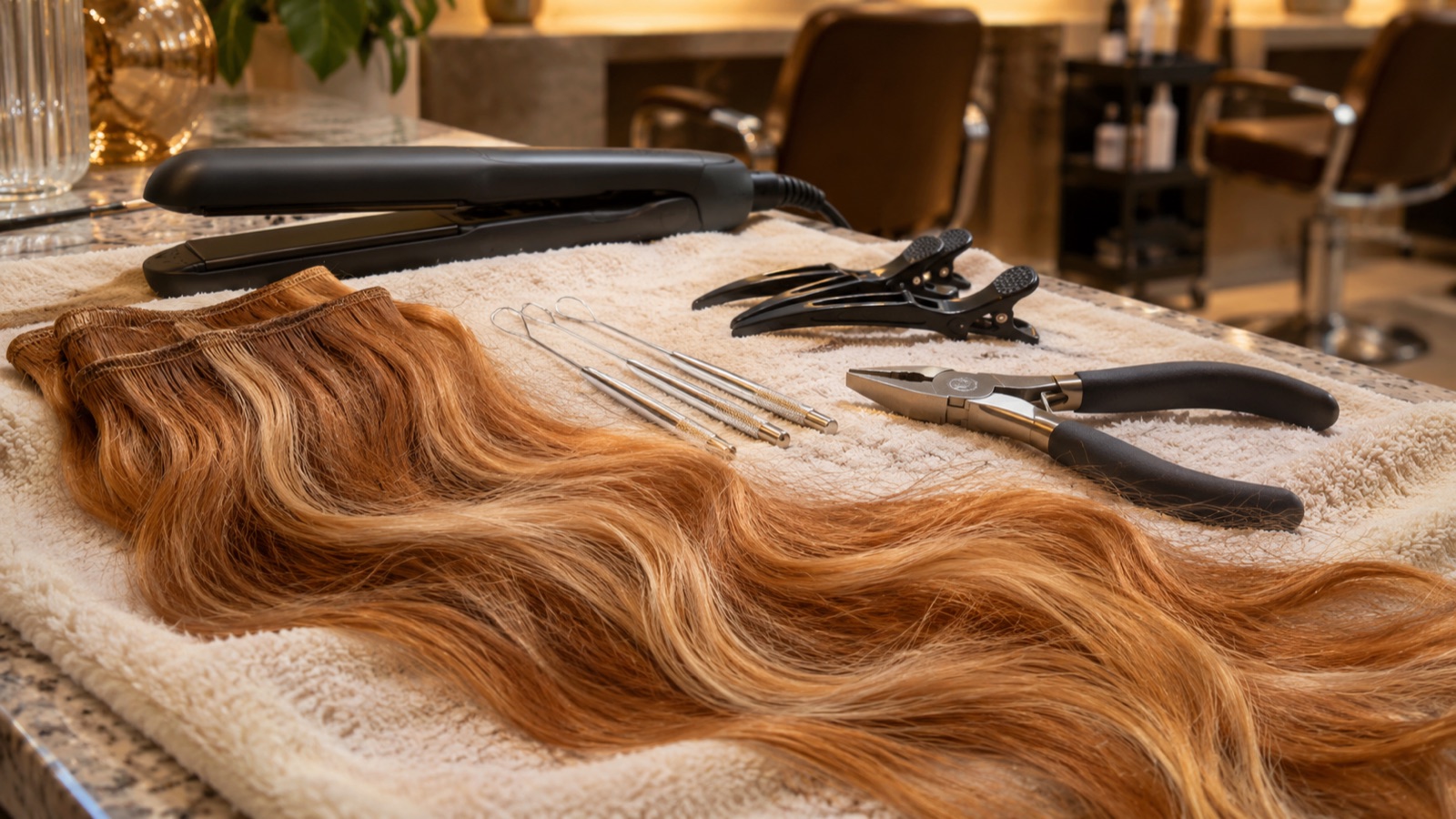
Five years ago, a stylist building out an extension kit would source tools from whatever her distributor stocked alongside the hair itself. Loop needle threaders from generic beauty supply, a removal tool from the weft brand, a extension-safe flat iron from a general professional line. The tool category was an afterthought. That is no longer the case.
A cohort of brands built specifically around extension application and maintenance tools has emerged at the intersection of professional education and direct-to-stylist e-commerce. Big Kizzy is the most prominent example, but it is part of a broader category shift that extension specialists need to understand, both for what it offers and what it signals about where client expectations are heading.
What Big Kizzy Actually Sells and Why Stylists Are Paying Attention
Big Kizzy built its initial reputation on a single product: an oversized paddle extension-safe paddle brush with a soft-flex base designed specifically to detangle without snagging extension bonds or weft edges. The brush retails at approximately $28, roughly double what a comparable general-market paddle brush costs. Stylists initially purchased it to recommend to clients for at-home use. That changed when educators started demonstrating it as a finishing tool at the chair.
The brand has since expanded into a dedicated extension removal tool, a clip-in organizer system, and a styling brush set. What distinguishes Big Kizzy from a generic tool vendor is the education layer: the brand produces application-specific content that ties product use to technique, which creates demand downstream. When a client sees her favorite extension educator using the Big Kizzy brush on a tutorial watched by 400,000 people, she arrives at her next appointment asking for that brush by name.
Extension specialists report that clients who purchase the recommended detangling brush show measurably better hair condition at move-up appointments. One stylist in the Dallas market described the pattern directly: clients who followed through on the brush recommendation returned with 60 to 70 percent less matting at the nape than clients who did not. That is not a marketing claim; it is a quality-of-service outcome that affects how much time a stylist spends on prep at each move-up.
The Economics of the Dedicated Tool Brand
The rise of specialized extension tool brands follows a pattern familiar from other professional niches: a product category that was historically served by general-market suppliers becomes precise enough that specialists command a premium. Nail technicians have lived in this world for decades with brands like Entity and Young Nails. Extension stylists are arriving there now.
For a stylist running a full extension practice, the calculation looks like this: a client who loses a k-tip bond to a poor-quality application tool costs $12 to $18 in replacement strands plus labor at the repair appointment. A removal tool that properly breaks down the keratin bond without torquing the natural hair at the cortex reduces bond breakage during removal. At $45 to $65 for a professional removal tool, the math pays out within the first three reinstall sessions where it prevents one repair.
The profit structure of tool brands is also attractive compared to hair itself. Hair is heavy, subject to import logistics, and requires significant inventory investment. Tools are lighter, more shelf-stable, and easier to build a direct-to-stylist subscription or bundle model around. Several newer brands in this space have launched with a kit model priced at $120 to $180, bundling four to six tools with access to application video content. Tool companies in this space are operating at a fundamentally different unit economics level than hair distributors working at single-digit returns per bundle.
What the Category Shift Means for How Stylists Stock and Spend
The practical question for extension specialists is whether dedicated tool brands justify the price premium over what is available through existing distributor relationships. The answer is not uniform across the tool category.
Detangling and finishing brushes represent the clearest case for specialization. The force dynamics at play when detangling installed extensions are meaningfully different from detangling loose hair. A brush built for that application produces better outcomes. Extension specialists who have switched to a dedicated extension brush consistently report less breakage at the shaft during client services.
Application tools are more variable. Loop needle threaders, for example, are a commodity product where the $4 version from a professional supply house performs comparably to the $22 version from a specialized brand. The premium here is largely in branding and the education bundle, not in the tool itself. Stylists who purchase application tools through a specialized brand are often buying access to the brand's certification or education content, which the tool is a low-cost entry point into.
Removal tools represent a genuine performance difference at the professional tier. A proper keratin bond removal tool with a temperature-calibrated tip and a controlled jaw mechanism prevents the cortex trauma that comes from prying bonds loose with a flat-edge tool or applying too much heat from a general flat iron. At an extension practice doing three to five reinstalls per week, the investment in a quality removal tool is operational, not optional.
The Education Layer as a Competitive Moat
The feature that most distinguishes the breakout tool brands in this category is not the product itself but the education infrastructure built around it. Big Kizzy, along with several newer entrants, has tied product releases to technique content that lives on Instagram and YouTube. This creates a feedback loop: the content educates stylists on technique, the technique improvement creates demand for the specific tool, and the tool brand captures that demand directly at a high return rate versus the much thinner returns on hair.
For established extension distributors, this education moat is the competitive pressure worth tracking. A stylist who learns a removal technique from a Big Kizzy tutorial is predisposed to purchase the Big Kizzy removal tool regardless of what her distributor stocks. The purchasing decision has already been made upstream, in the content layer, before the distributor relationship enters the picture.
The implication for extension specialists is that the brands worth evaluating are those with a clear technique rationale, not just a premium price point. Before adding a new tool brand to a kit recommendation, ask what specific outcome the tool improves and whether the brand can demonstrate that outcome in a repeatable way. The ones that can are building something durable. The ones that cannot are riding the current moment in extension education and will not sustain it.
What to Watch in the Next 12 Months
The extension tool category is not fully formed yet. Several trends are worth monitoring for stylists who want to position their practice ahead of the next wave rather than react to it.
First, the heat tool segment remains fragmented. No brand has produced a flat iron with settings calibrated specifically for the thermal requirements of keratin bonds versus tape bonds versus synthetic blends. That product, when it arrives, will command a significant premium and will likely be backed by an education program. The stylist who adopts it early will have a technique differentiation claim before it becomes the market standard.
Second, the client-facing tool segment is where Big Kizzy and its peers have the most growth runway. Most extension clients cannot name a single brand of tool in their kit. As brands invest in content that follows the client home, the retail opportunity at the chair expands. Extension specialists who build a product recommendation protocol into their move-up appointment structure are capturing revenue that currently flows to Amazon or a generic beauty supply retailer.
Third, watch for consolidation. The extension tool space currently has more entrants than it will sustain. The brands that have built genuine technique credibility will acquire or outlast the ones that have not. Understanding which is which now saves the cost of switching a client recommendation mid-stream.
Questions Stylists Are Asking
Is a dedicated extension removal tool worth the price premium over a standard flat iron?
For a practice doing regular keratin bond reinstalls, yes. A calibrated removal tool prevents cortex trauma and bond breakage during removal, which reduces repair costs at the next install. The payback period at three to five reinstalls per week is typically under two months.
Should stylists retail extension tools to clients?
For detangling brushes and extension-safe styling tools, yes. Clients who use the right tools at home return in better condition at move-ups, which protects the stylist's work and the client's hair. The retail revenue on a $28 to $45 brush is modest, but the service quality benefit is material.
Disclosure: This post contains affiliate links. We may earn a small commission at no additional cost to you if you purchase through our links.