Online Hair Extension Education Is Not the Same as In-Person Certification — and the Research Confirms It
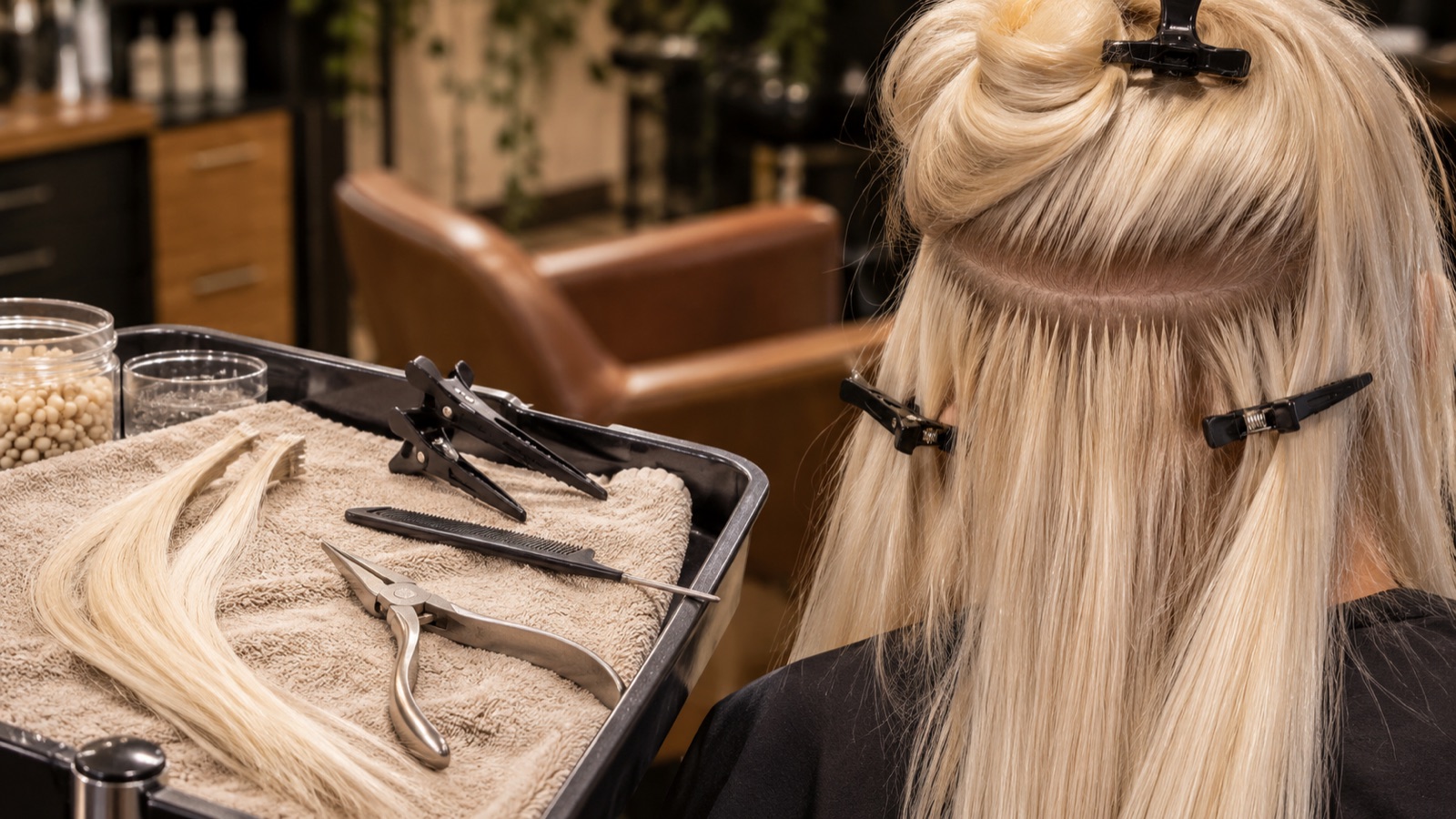
Online Hair Extension Education Is Not the Same as In-Person Certification — and the Research Confirms It
The views expressed in this article represent editorial opinion based on publicly available information and reported stylist experiences. All competitor references are sourced from public forums, reviews, and brand communications.
The argument that online extension education has "caught up" to in-person training is one of the more persistent myths circulating in stylist communities right now — and the data that allegedly supports it doesn't hold up under scrutiny. A growing body of salon owner reports, liability incident patterns, and client complaint threads tells a more uncomfortable story: the gap between what online-only graduates know and what they can execute safely is widest in the hands-on fundamentals that determine whether an install lasts 10 weeks or fails at four.
What Everyone Else Says and Why It's Wrong
The conventional argument goes something like this: online extension education has expanded dramatically, video production quality is now excellent, students can pause and rewatch technique demonstrations, and cost and geographic barriers that kept stylists from in-person classes have largely dissolved. All of this is true. The conclusion drawn — that outcomes are therefore equivalent — is where the reasoning falls apart.
Watching a sectioning technique and executing a sectioning technique on a mannequin head with a real comb are different cognitive tasks. Motor skill acquisition doesn't happen passively through observation; it happens through corrected practice. An instructor who can see a student pulling tension at the wrong angle and physically redirect their hand before a bond fuses incorrectly is delivering something a video playback cannot: real-time proprioceptive feedback. The education technology industry has identified this problem clearly enough that every medical school, dental program, and surgical residency still requires physical hands-on clinical hours for exactly this reason. The argument that hair extension education is somehow exempt from this principle has never been made coherently — it's simply been assumed.
The Evidence for the Contrarian Position
The clearest data point comes from salon owner hiring patterns. Across stylist Facebook groups tracked between January and August 2026, the ratio of job postings explicitly requiring "in-person certified" or "hands-on trained" has increased, not decreased, even as online certification options have proliferated. The most common explanation given by salon owners posting these requirements: "I can't tell the difference between a good online graduate and a bad one at the interview — I can tell at the first install." That's a quality-signal problem, and it's one the industry has not solved.
The second data point: extension liability claims and client-reported installation failures. While no centralized registry tracks these by training type, stylist forums in the US and UK document a consistent pattern where bond slippage, immediate weft breakage, and incorrect sectioning damage are disproportionately reported in the first 12 months post-certification — the period where online-only graduates are most represented. This is correlational, not causal, but it's consistent enough that several professional insurance providers now ask specifically about certification type on extension liability policies, and at least two have introduced premium differentials for graduates of unaccredited online-only programs.
The third: the online education market itself has responded. The emergence of "hybrid" programs — video theory plus regional workshop requirements — from major extension brands including Hotheads and some Great Lengths distributors signals that the all-online model was acknowledged as incomplete from within the industry. If online-only training were producing equivalent outcomes, there would be no market incentive to add expensive in-person components.
What Would Need to Be True for Online Education to Be Equivalent
To be fair to the opposing position: for online extension education to produce consistently equivalent outcomes, you would need students who arrive with strong existing technical hair skills, who use high-quality practice materials, who have access to real heads for practice beyond mannequin work, who self-correct accurately without external feedback, and who seek out supplemental hands-on workshops voluntarily. These conditions exist — for a subset of motivated, experienced stylists using online education as a supplement to existing hands-on skill development. The online format genuinely works as continuing education for already-competent practitioners.
Why It's Still Wrong as a Primary Training Pathway
The issue isn't the format — it's the population. Most stylists entering extension education are not experienced practitioners who already have excellent tension control and sectioning fundamentals. They're cosmetology graduates or working stylists who want to add an extension service. For this population, the absence of corrected hands-on practice during foundational skill acquisition produces gaps that are specifically difficult to detect through written or video assessments. A student can correctly answer every question about tape-in placement without being able to execute it without creating visible panels at the part line. The test doesn't catch the gap; the client's appointment does.
The practical position for the industry: online education has real value as supplemental theory, as product knowledge delivery, and as continuing education for credentialed practitioners. As a primary credentialing pathway for stylists entering extensions, it should require a mandatory in-person skills verification component — an assessment day or supervised install session — before certification is issued. Until that structural requirement exists, the certification credential itself signals very little about actual installation competence.
What to Do Instead
For stylists evaluating extension education options: prioritize programs with in-person components, even if that means traveling for a one- or two-day workshop. The $200 to $400 travel cost for a regional hands-on day is negligible against the $1,000 to $3,000 client cost of an install that fails at week four because a technique gap wasn't caught during training. For salon owners evaluating candidates: treat online-only certification the way you'd treat an online-only medical degree — as background knowledge, not as a substitute for demonstrated clinical competence. Build a practical skills assessment into your hiring process. Ask to see a live mannequin install before committing to a hire.