Single-Sided Tape Weft: The Innovation Changing Installation
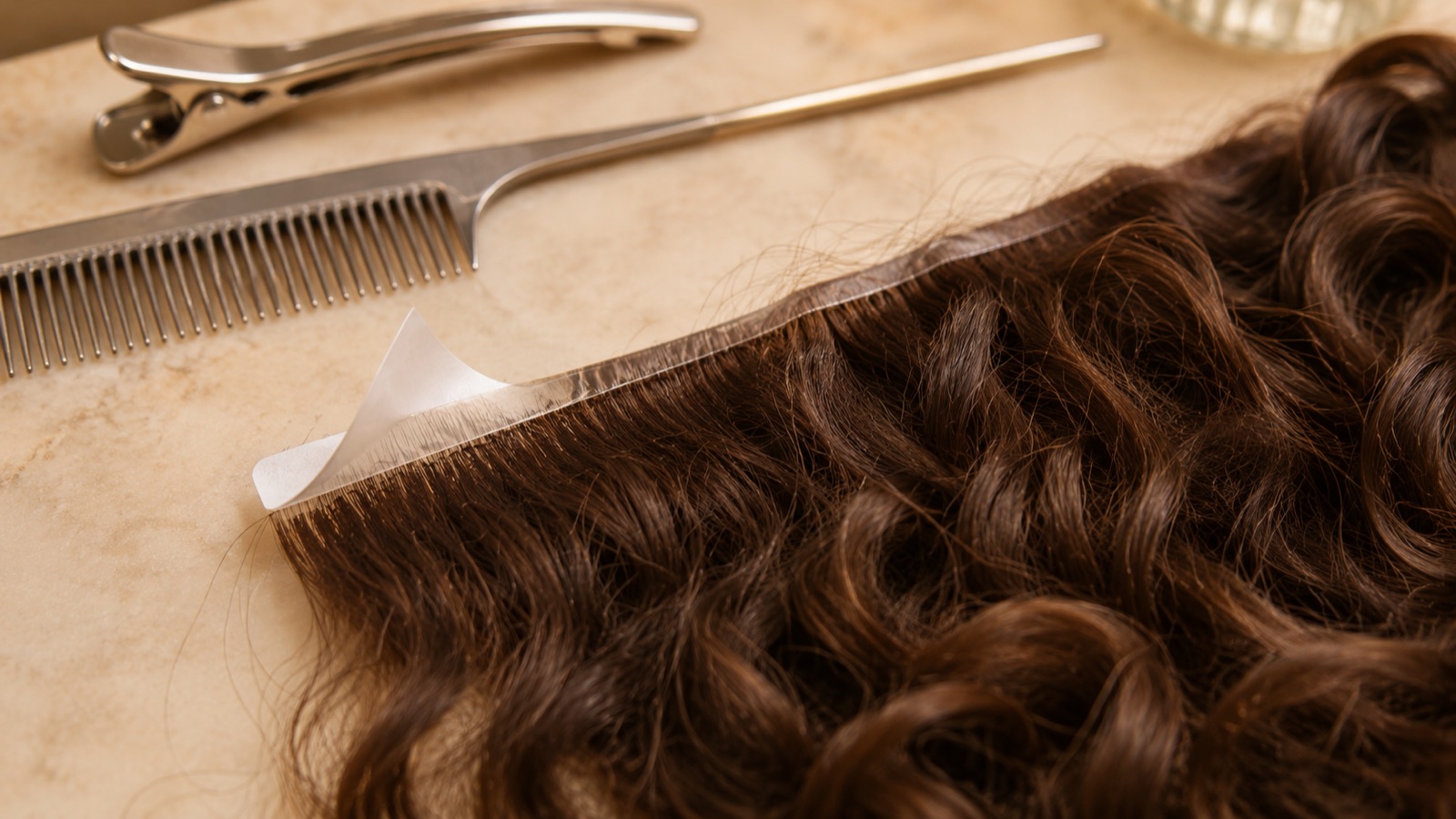
Single-sided tape weft technology arrived quietly. The first production runs hit the US market in early 2025, carried mostly by a handful of European-trained stylists who had seen the format in Germany and the Netherlands. By mid-2026, every major extension house had a version of it. The speed of adoption signals something real: this format solves a genuine installation problem, not a marketing one.
What Single-Sided Tape Weft Actually Is
Traditional tape-in extensions are two separate wefts sandwiched around a section of natural hair, adhesive facing each other. Single-sided tape weft uses a pre-tipped weft — the adhesive is fused directly to the underside of the weft itself, so the installation uses one piece instead of two, applied like a hair sticker against the root area and sealed with a heated bonding tool rather than a sandwiching technique.
The distinction matters because the installation geometry is different. With traditional tape-ins, the stylist sections, isolates, sandwiches, and presses. With single-sided weft, the stylist sections, isolates, applies the weft like a beaded row tape, and seals. The motion is closer to applying a weft row than installing individual tape tabs. Experienced installers report reducing their application time by 20 to 30 percent on a full head. For a four-row install that previously took three hours, that's a meaningful chunk of chair time.
The weft format also means the hair coverage per application point is wider. Traditional tape-ins use a 1 to 1.5-inch wide tab. A single-sided tape weft is typically 3 to 5 inches wide per section, meaning fewer individual application points for the same volume of hair. This reduces the number of bonds to maintain, remove, and reapply at move-up appointments.
Installation Protocol Differences from Traditional Tape-Ins
The sectioning approach is the most significant procedural shift. Single-sided tape wefts need flat, clean subsections that sit flush against the root. Any angle or lift at the parting causes the weft to sit proud of the scalp, which creates visible track lines and uneven wear. Stylists moving from traditional tape-ins frequently overshoot the section width on their first few heads because they're used to narrower tape-tab sections.
The activation tool matters more here than with traditional tape. Most manufacturers specify a bonding iron operating between 185°F and 200°F (85 to 93°C) — significantly lower than the flat irons used to fuse traditional tape tabs. Using the wrong tool temperature either fails to seal the adhesive properly or compromises it through over-application. Stylists should verify the manufacturer's specification before the first install rather than estimating.
Move-up protocol is also different. Traditional tape-in removal uses adhesive remover to dissolve the sandwich bond. Single-sided tape weft removal uses a releasing spray on the single adhesive strip, then peels upward rather than separating two sandwich layers. The hair tension dynamics are different — there's less risk of tangling at removal because you're working with one adhesive surface instead of two pieces fused together with hair in the middle.
Who the Format Serves Best — and Who Should Wait
Single-sided tape weft is optimal for clients with medium-to-coarse hair density, straight to slight-wave natural texture, and a scalp pattern suited to horizontal row placement. The flat application requires natural hair that lies relatively flat at the root. Fine hair clients, curly hair clients, and clients with cowlicks or pronounced scalp irregularities present more challenge — the weft can lift at the edges where the scalp doesn't sit flat.
For stylists, the format rewards those who already have clean sectioning and tape-in experience. A stylist who struggles with flat tape-in application will struggle more with single-sided weft because the weft width amplifies any sectioning imprecision. The first few installs should be on cooperative natural hair textures before attempting more complex applications.
For established tape-in stylists with a clientele of medium-density, straighter hair, the format is a direct upgrade. The time savings alone justify the format switch, and clients benefit from fewer individual attachment points that need maintenance.
What the Market Data Shows About Adoption
According to stylist reports across professional extension communities, single-sided tape weft has seen the fastest adoption curve of any new extension format since genius weft emerged around 2019. Based on distributor ordering patterns reported in industry publications, single-sided tape weft represented less than 5 percent of professional tape-in purchases in early 2025 and crossed 20 percent by the second quarter of 2026.
The driver is economics. For a stylist charging $400 for a tape-in install, cutting application time by 25 percent means a higher effective hourly rate without raising service prices. Move-up services are also faster, which matters at the booking level — a 45-minute tape-in move-up that drops to 30 minutes opens more appointment slots per day.
Product pricing at the distributor level hasn't stabilized yet. Early market entrants charged a premium for the pre-tipped format — 15 to 25 percent above equivalent virgin tape-in hair per gram. As more manufacturers enter production, that premium is expected to compress. Stylists purchasing at current pricing should factor the time savings into the ROI calculation before evaluating the format on hair cost alone.
The Technique Details That Separate Clean Installs from Problem Ones
The most common installation failure in single-sided tape weft is insufficient root preparation. The scalp area beneath the application zone needs to be completely clean and dry — any residual oil, dry shampoo, or styling product creates a contamination layer that reduces adhesive bond strength. A clean-scalp client policy and a scalp prep wipe before installation are non-negotiable for this format.
Edge sealing is the second variable. The weft's adhesive strip extends the full width of the piece, including to the lateral edges. Those edge points are where single-sided wefts most frequently lift early if the bonding press doesn't fully activate them. A thorough press from center outward — rather than a single press across the width — ensures the edges get adequate heat contact.
One stylist working with this format for eight months on 40-plus clients described the adjustment as "relearning where your hands go." The physical motion of sealing a wide weft is different from pressing a narrow tape tab, and stylists who try to apply single-sided weft with tape-in hand mechanics end up with inconsistent bond activation across the weft width. Slowing down on the bonding press step until the motion is automatic is the correct progression.
How long does single-sided tape weft last compared to traditional tape-ins?
Both formats typically require move-up appointments every 6 to 8 weeks. Single-sided tape weft may show slightly longer wear between moves when properly installed on clean scalps because there are fewer individual bond points to fail. However, the move-up timeline is still primarily driven by hair growth rather than bond longevity. A client who grows 0.5 inch per month needs her move-up at six to eight weeks regardless of format.
Can single-sided tape weft be reapplied at move-up appointments?
Yes, with proper removal and adhesive renewal. Most manufacturers supply replacement adhesive strips for re-tipping at move-up, similar to how traditional tape tabs are replaced. The weft itself can typically be reused two to three times before the hair quality at the root end degrades. Reuse rate depends on how carefully the weft is stored, cleaned, and handled between appointments.
Is single-sided tape weft suitable for all hair textures?
It performs best on medium to coarse, straight to slightly wavy hair. Curly and tightly coiled natural textures create uneven surface contact at the root, which affects adhesive coverage. Fine hair is workable but requires extra attention to root preparation and edge sealing. Stylists should build competency on cooperative hair types before attempting complex or fine-hair applications.
Single-sided tape weft is not a novelty format with limited long-term utility. The efficiency gains it delivers to established tape-in stylists are real and recurring — every install, every move-up, every removal. For stylists evaluating whether to invest in training and product, the question isn't whether the format is viable. It's whether their current clientele is the right candidate pool to start with.