Tape Weft vs Tape-In: What's the Actual Difference and Which Should You Offer?
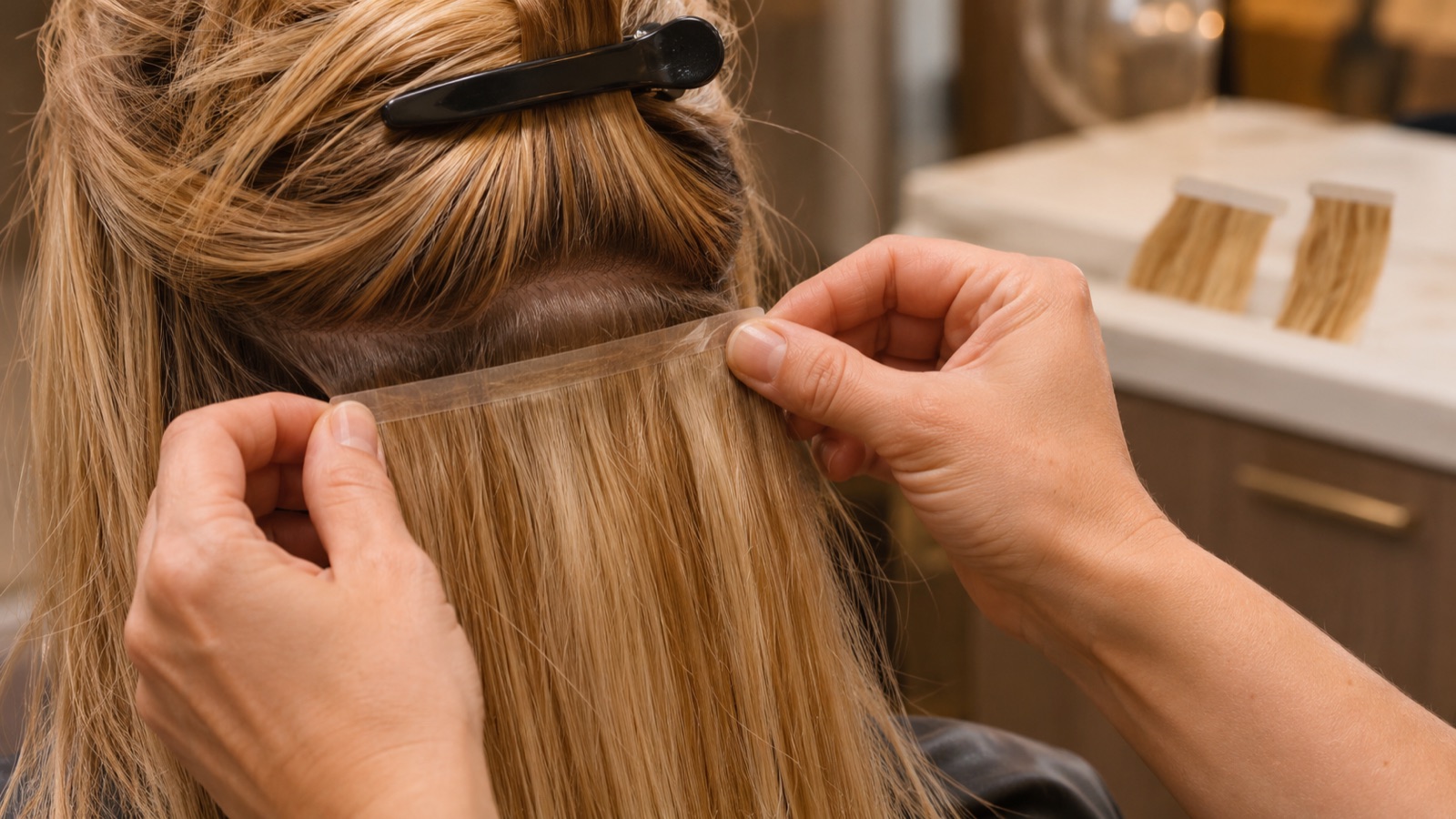
The tape-in method has held the top spot in non-surgical extension volume for over a decade. The tape weft, which shares the same adhesive delivery system but is structurally different from a tape-in, has been gaining ground quietly. Stylists who have installed both are now fielding a question from clients and newer technicians alike: are these the same thing, and if not, which one should you be offering?
They are not the same thing. The confusion is understandable because both methods involve adhesive tape at the attachment point, but the construction of the hair piece, the installation geometry, and the client experience are distinct enough that a stylist optimized for one is not automatically optimized for the other.
Construction: What Makes a Tape Weft Different From a Tape-In
A traditional tape-in extension is a strip of wefted hair bonded to a thin strip of polyurethane tape on one face of the weft. Installation involves sandwiching a section of the client's natural hair between two tape-in strips, adhesive-to-adhesive. The bond is the sandwich. The client's hair runs through the center of the bond.
A tape weft, as the newer category defines it, is a machine-sewn or hand-tied weft that has been bonded to a tape backing along its entire length. The critical structural difference is that the tape weft is installed as a single piece along the top of a natural hair section. There is no sandwich; the weft is laid flat against the scalp side of the section, and the client's hair lays over it. Some tape weft systems use a single-sided adhesive tape along the weft header; others use a double-sided tape that presses into the natural hair from above.
The single-sided tape weft format, which gained momentum through 2025 and 2026, eliminates the sandwich entirely. The weft lies flat against the scalp with nothing between the weft and the client's hair except the adhesive header.
Installation Speed and Technique Differences
Tape-in installation is measured in 40 to 60 piece counts for a full install, with each piece taking 30 to 90 seconds to apply once sections are mapped. The total chair time for a tape-in from application start to finish runs 60 to 120 minutes for most stylists, with the variability coming from section precision and the client's density.
Tape weft installation typically uses fewer pieces, because the wefted hair is wider and covers more ground per attachment point. Extension specialists report tape weft installs completing in 45 to 75 minutes for a full row set, with some practitioners citing faster times on clients where high density makes sandwiching awkward. The per-piece cost of tape weft hair is typically higher, because the weft construction is more complex, but the reduced piece count can offset this in total material cost.
The sectioning geometry is different and requires a learning period. Stylists trained exclusively on tape-ins who move to tape wefts often report that the first five installs feel slow, with the speed advantage materializing only after the sectioning pattern is internalized. Those who have done hand-tied weft work typically adapt faster because the row-based layout is familiar.
Longevity, Move-Ups, and Maintenance Comparison
Both methods use the same adhesive chemistry, so the bond degradation timeline is comparable: six to eight weeks is the industry standard move-up window for both. Where the methods diverge is in how the bond behaves at the end of that window.
Tape-in bonds, because they are sandwiched through the natural hair, can become tangled with outgrowth more aggressively than tape wefts if the client has been inactive with maintenance. The root area on a tape-in that has not been moved up for ten or more weeks often requires more detangling time at removal. Tape wefts, because the bond sits on one side of the natural hair rather than threading through it, tend to release more cleanly at the same stage of outgrowth.
This does not mean tape wefts are maintenance-free. Single-sided tape wefts are more susceptible to lifting at the weft edge than a sandwiched bond, particularly in clients who apply product close to the root or who sleep on wet hair. The counter-argument that sandwich bonds have better mechanical retention is accurate. The trade-off is removal ease versus bond stability.
Which Clients Suit Each Method
Extension specialists who work across both methods tend to segment their client recommendations on the following criteria:
Tape-ins are often better for: clients with medium to thick density who want proven bond durability; clients who have worn tape-ins before and understand the maintenance requirements; and cases where the goal is maximum volume with confident long-term retention.
Tape wefts are often better for: clients with fine hair where a sandwich bond creates visible bulk at the root; clients who have experienced matting or tangling at move-up appointments with tape-ins; and situations where a faster install cadence matters because the stylist has a high-volume practice.
Some practitioners argue that hand-tied wefts are always superior to both for fine hair. Extension specialists counter that hand-tied wefts require beads or a sewn application that creates its own mechanical stress, and that a properly installed tape weft on fine hair causes less follicle tension than most bead-based methods. The evidence across client-reported outcomes supports both positions, depending on the installer's skill set.
The Sourcing and Pricing Landscape
Tape-in extensions are among the most widely sourced extension types in the professional market. Nearly every extension distributor carries them, which has created significant quality variance at the lower end of the price spectrum. Tape wefts are a newer commercial category, and sourcing is currently concentrated in a smaller number of specialized distributors.
Professional-grade tape-ins run $150 to $400 per set of 40 to 50 pieces at typical pro-tier pricing, with premium European-origin product at the top of that range. Tape weft product pricing is still establishing its floor, with current market pricing for professional tape weft sets running $180 to $450 depending on origin and weft width.
The practical implication for stylists who stock both is that tape weft inventory has a shorter shelf life as the method evolves. Product specifications and adhesive formats are still shifting as manufacturers iterate, which is a real inventory consideration for salons buying in volume.
Frequently Asked Questions
Can a stylist trained on tape-ins install tape wefts without additional training?
Technically yes, but the transition benefits from hands-on practice. The sectioning pattern and the adhesive activation sequence differ enough that working on a mannequin head before a first client install is standard practice advice from distributors who carry both systems. Stylists who skip this step report inconsistent bond-to-scalp alignment on early installs.
Do tape wefts damage hair more or less than tape-ins?
Neither method is inherently more damaging than the other when installed correctly. The damage risk profile is different: tape-ins carry more risk from improper removal, while tape wefts carry more risk from lifting and re-pressing without proper adhesive refresh. Both require professional removal and maintenance.
Is tape weft the same as a sewn-in or a hybrid weft?
No. A tape weft uses adhesive for attachment, not thread and beads. A hybrid weft is a construction of the hair piece, not the attachment method. Some hybrid wefts are installed with tape backing; others are beaded. The term "tape weft" specifically refers to a weft installed using a tape adhesive at the header.