The Halo PRO Extension Kit: Is the Halo Method Finally Professional-Grade?
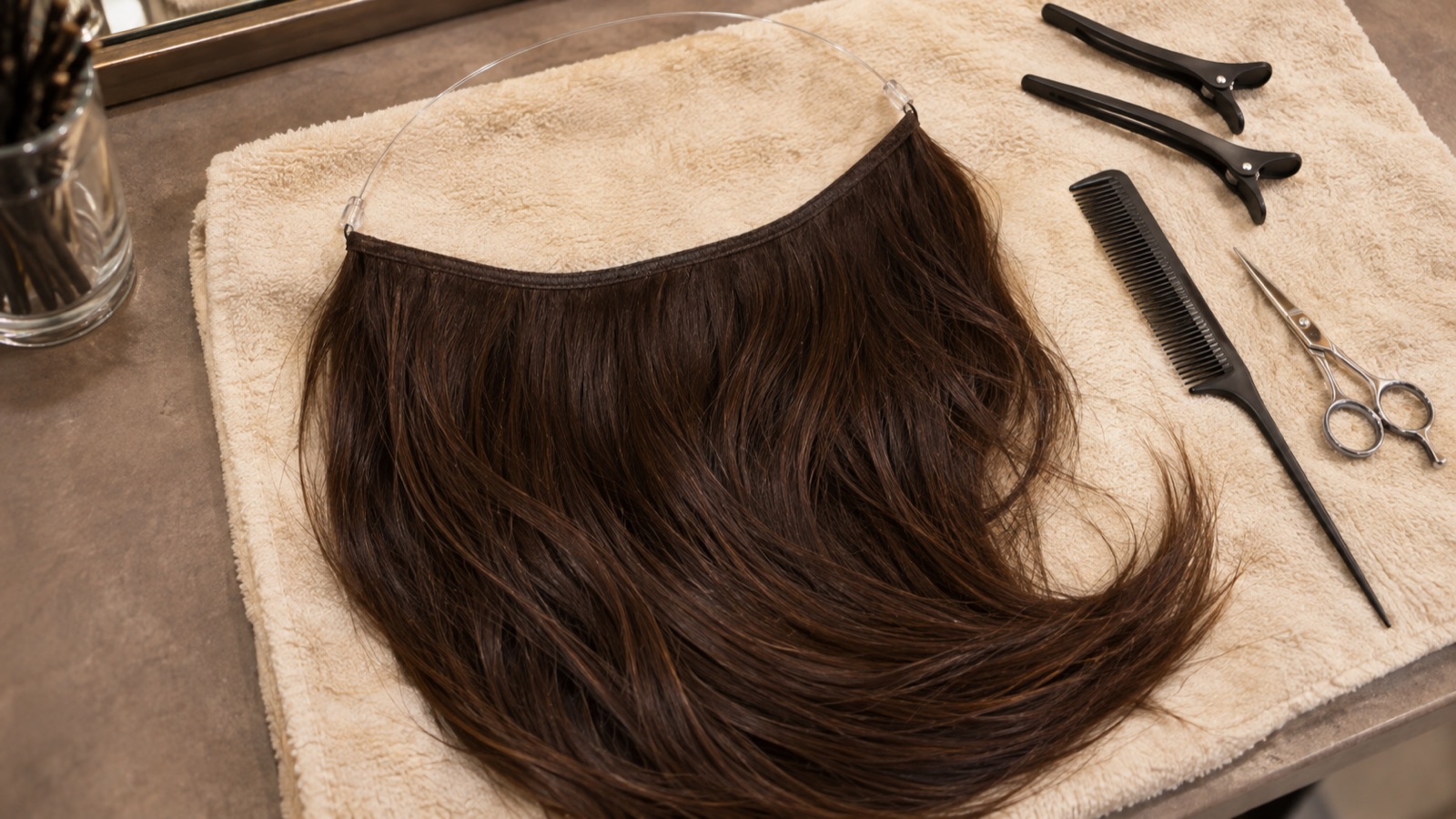
The Halo PRO Extension Kit: Is the Halo Method Finally Professional-Grade?
This article represents the editorial opinion of Weft Magazine and is based on publicly available information. We have no financial relationship with any brand mentioned.
The answer is no — and the framing of the question is the problem. The halo extension method has been repositioned as a professional-grade service for several years now, and the language around kits like the Halo PRO follows the same logic: upgraded wire, better shade matching, premium packaging. These are real improvements over drugstore halo kits. They are not the same thing as being professional-grade in any meaningful technical sense. Here is why the distinction matters, and why extension specialists who add halo services need to be clear-eyed about what they are selling.
What the Industry Says About Halo Extensions — and Why the Professional Argument Doesn't Hold
The conventional case for halo extensions as a professional service goes like this: when installed by a trained stylist with the right wire tension, color-matched precisely, and sized correctly for the client's head, a halo extension is undetectable and delivers the volume and length the client wants without any adhesive or chemical contact with the natural hair. No damage. Immediate result. Removable by the client at home. Stylists who argue this position often point to their training certifications and their client photos as evidence.
All of that is true. It is also not what makes something professional-grade. A method is professional-grade when it requires the sustained skill and expertise of a licensed professional to maintain safely, and when the results degrade or cause harm without that professional involvement. Tape-in extensions require a professional for removal and reinstall — improperly removed tapes pull natural hair. Hand-tied wefts require professional beading and row maintenance — improperly maintained rows cause traction alopecia. The client cannot do these safely at home.
A halo extension the client can remove, reposition, and wear independently is by definition a consumer product. The professional adds value through color matching, sizing, and positioning guidance — and that value is real. But it is the value of a fitting, not the value of a technical service that only a professional can safely deliver.
The Actual Evidence Against the "Professional-Grade" Framing
Three data points worth considering. First, every major halo kit manufacturer — including the brands positioning their products as professional — sells directly to consumers. Retail packaging, consumer-facing marketing, direct-to-consumer e-commerce. Professional-grade products in adjacent industries (injectable aesthetics, pharmaceutical-grade skincare actives, clinical laser devices) are not sold on the same shelf as consumer alternatives. The "professional-grade" label in the halo market is primarily a positioning move, not a distribution or access distinction.
Second, the maintenance economics don't support a recurring professional relationship. A tape-in client returns every 6-8 weeks. A keratin bond client returns every 3-4 months for a move-up. A halo client returns when the wire needs replacing or the color match needs refreshing — typically every 6-12 months, and many clients handle this themselves with replacement wires and new kits. The method structurally limits the professional relationship to an initial fit and intermittent consultations. That is a legitimate service offering. It is not the same business model as method-based extension installation.
Third, extension specialists who are candid about their earnings report that halo services typically generate $150-$350 per appointment for a fitting and color consultation. Full permanent extension installs — tape-ins, hand-tied wefts, keratin bonds — run $600-$2,500 per install depending on method and market. The economics reflect the actual skill differential.
The Steelman: When the Professional-Grade Argument Would Actually Work
To be fair to the other position: there is a real case where halo extensions are unambiguously the professional recommendation. Clients with significant traction alopecia, clients in chemotherapy, clients with medical hair loss conditions, and clients who need a non-commitment solution for a specific event — these are all cases where a halo extension is genuinely the most appropriate professional recommendation. In that context, the stylist's value is clinical: assessing candidacy, sizing correctly, managing expectations, and providing ongoing scalp monitoring. That is a professional service. A stylist who builds a specialization around medical hair loss clients and incorporates halo extensions as a clinical tool is doing professional-grade work. The kit is still a consumer product. The assessment and care context around it is not.
Why the Professional-Grade Claim Still Doesn't Land
Because the market is using the framing to compete with permanent installation services rather than to build a complementary specialty. When extension stylists add halo services as an alternative to tape-ins — "try a halo first to see if you like the look before committing to a permanent install" — they are borrowing professional-grade positioning to justify a service that structurally undercuts their own booking model. The clients who choose halos over permanent extensions because they were presented as equally valid professional options often regret the choice within 90 days. And the stylist has cannibalized a $1,200 install with a $250 fitting.
The Halo PRO kit is a well-made consumer product. The wire quality is better than entry-level halo kits. The shade range has expanded. The marketing is premium. Stylists can absolutely offer halo services professionally — as a specialty for appropriate candidates, priced honestly for the service level it represents, without positioning it as equivalent to method-based professional installation. That is a legitimate business decision. Calling it professional-grade because the kit has a PRO in the name is a different thing entirely, and extension specialists who understand the distinction will make better decisions about how they structure their service menus.
What Extension Specialists Should Actually Do With This Category
If you want to offer halo extensions, price them as a fitting service — not as an extension install. A 30-45 minute fitting and color consultation at $150-$200 is honest positioning that doesn't compete with your installation revenue. Make the candidacy criteria explicit: halos are appropriate for events, for medical hair loss clients, and for clients who want to test length and volume before committing to a permanent method. That conversation converts halos from a revenue threat into a funnel. The client who comes in for a halo fitting and sees the difference a full tape-in install would make is often the one who books the install six weeks later.
What to avoid: presenting halo extensions as equivalent alternatives to permanent installation, or using the professional-grade framing to justify a rate structure that doesn't match the actual service complexity. The clients who see through this positioning — and many of them will — lose confidence in the consultation process entirely. Honest specialty positioning serves both the client and the business.
Frequently Asked Questions: Halo Extensions and Professional Services
Are halo extensions safe for daily wear?
Daily halo wear is generally safe for most hair types, but the wire can cause localized tension if worn for extended hours over multiple consecutive days without breaks. Stylists recommending daily wear should address wire tension and provide clear guidance on time-off intervals — particularly for clients with fine or fragile hair near the hairline where the wire sits.
How do halo extensions compare to tape-ins for bridal clients?
For most bridal clients, tape-in extensions deliver better security, more natural movement, and a more convincing finish under professional styling than a halo. The key exception is a bride with significant scalp sensitivity or a medical contraindication to adhesive — in that case, a properly fitted halo is the professional recommendation. Stylists who offer both should present the tradeoffs honestly rather than defaulting to whichever is easier to fit.
What training is required to offer halo extensions professionally?
Most halo brands offer certification courses ranging from a few hours to a full day. The certification covers wire sizing, placement, and color matching. The industry has no standardized requirements for halo certification the way it does for chemical services. Stylists adding halo to their menu should evaluate training based on the candidacy assessment component — identifying which clients are and aren't appropriate candidates is where the professional value actually lives.