The Demand for Textured Extensions Is Growing. Are You Offering Them?
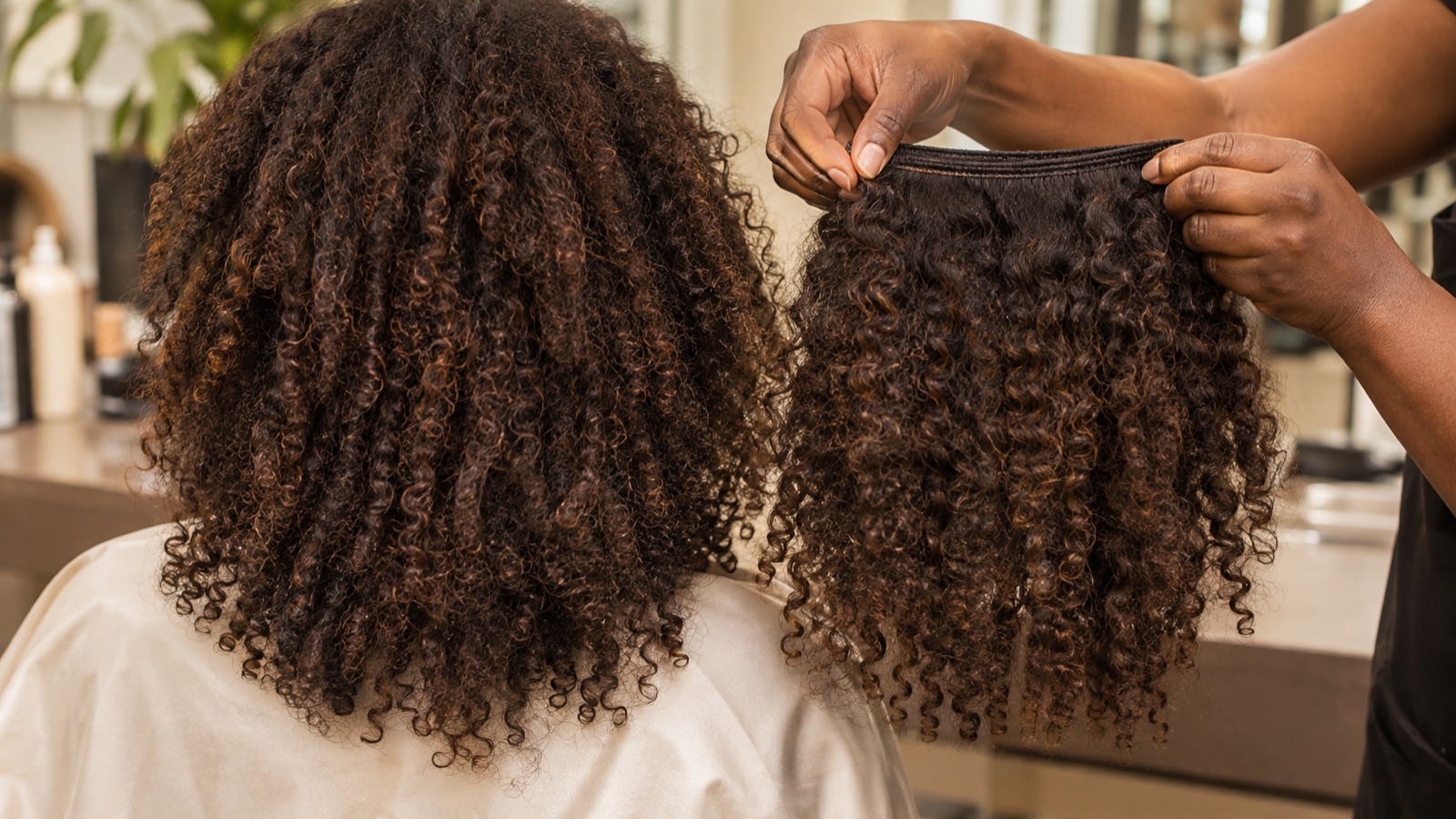
Textured hair extensions — curly, wavy, coil-pattern, and afro-kinky — represent a growing share of extension demand that most extension specialists are not equipped to meet. Across stylist communities and in booking data reported by extension platforms, demand for textured extension services has increased as the client base for extensions has become more racially and texturally diverse. The specialists who built their practices on straight and wavy Remy sets are increasingly encountering consultations for which they have no product and no trained technique. That gap is a business problem, and it is solvable.
Who Is Driving Demand for Textured Extensions
The growth in textured extension demand is primarily coming from two client groups. The first is natural hair clients who want length or volume but cannot achieve the blends they're looking for with standard silky or body-wave extensions. These clients have type 3 and type 4 curl patterns, and they are accustomed to being told their hair texture "doesn't work" with extensions. The second group is clients who wear protective styles as a cultural practice and want premium human hair extensions for those installs, particularly for sew-ins and hand-tied wefts in textured configurations.
Both groups represent clients with established extension habits and real purchasing power. They are not asking for education about why extensions might work for them. They already know. They are asking whether a specific specialist can deliver the technical result they want. When the answer is no, they book elsewhere.
What "Textured Extensions" Actually Covers in the Product Catalog
The product category for textured extensions is broader and less standardized than the straight and wavy categories. At the loose end, it includes natural wave (a soft S-wave that blends into wavy type 2 hair), body wave, and deep wave extensions, all of which are sold in mainstream extension lines and require no specialized sourcing. These are not "textured" in the clinical sense but represent the accessible entry point for specialists who want to serve a wider curl range.
At the more specialized end: kinky straight (a looser, slightly coily texture that mimics relaxed African American hair), kinky curly (tight curl pattern, type 4 range), coily (smaller curl diameter, often labeled 4A or 4B), and afro-kinky or Mongolian kinky extensions. Pricing in this category runs higher per bundle, typically $80 to $160 for a 100g weft in longer lengths compared to $60 to $110 for equivalent straight inventory, because sourcing aligned, unprocessed textured hair is genuinely more difficult. The processing required to create tight curl patterns while maintaining cuticle alignment also adds cost.
The Technique Gap Is Bigger Than the Product Gap
Sourcing textured extensions is not the primary barrier for most specialists. The technique barrier is. Installing hand-tied wefts into type 4 hair requires different tension calibration than the same installation into type 2 hair. Tape-ins rarely work as a standalone method for type 4 clients because the natural hair requires manipulation techniques (detangling, sectioning, blowout prep) that are specific to that texture. K-tips and I-tips can work but require beads and loops sized for the client's natural strand diameter, which is typically finer in coily hair types than stylists accustomed to European hair expect.
Some specialists have pointed to blending as the core challenge: a textured extension and the client's natural hair must move, hold moisture, and style as a single unit. When they don't, the client's installed length reads as a wig, not as their own hair. Getting the blend right requires understanding how the natural hair behaves when wet, how it shrinks relative to the extension, and which styling products will work on both simultaneously. This is teachable, but it requires hands-on training with textured products and textured clients, not just reading a product description.
Building Textured Extension Capability Into Your Service Menu
Specialists who have built textured extension revenue into their practice have generally done it in three phases. In the first phase, they sourced a narrow range of textures (typically natural wave through deep wave) and started offering consultations explicitly to clients who had been turned away elsewhere. The initial case load is small but highly referral-active. These clients talk to each other, and a specialist who can actually deliver the result gets word-of-mouth that the standard market does not generate.
In the second phase, they invested in hands-on training for type 3 and type 4 installs specifically. Several extension brands now offer certified training in textured installs, and the barrier to entry is a few hundred dollars and a training day, not a full curriculum overhaul. The third phase is pricing: textured installs are priced at a premium because they take longer, require more product knowledge, and are genuinely scarcer. A specialist charging $900 for a standard genius weft install should be charging $1,100 to $1,300 for the equivalent textured install once they have the technique.
What Specialists Who Are Not Moving Into This Category Are Missing
The argument for staying exclusively in straight and wavy extensions is that the market is proven, the products are standardized, and the technique is known. This is correct. The countervailing argument, which is appearing more frequently in specialist communities, is that the straight and wavy extension market is also the most saturated segment. Building a reputation in textured extensions while that segment is still underserved is a positioning move with a shelf life. In two to three years, as more specialists invest in textured training and the product supply chain normalizes, the differentiation advantage of being an early mover will compress. The specialists currently offering it are not competing with the full market. They are competing with the small subset of their local peers who figured this out first.
Frequently Asked Questions
What is the first product category to stock if you want to start offering textured extensions?
Natural wave and deep wave are the most accessible starting points. These textures blend into type 2 and 3 natural hair, the client pool is large, and the technique is an extension of existing weft install skills rather than a new skill set entirely. Kinky and coily textures serve a narrower client type and require more specific training before offering commercially.
How do you price a textured extension consultation compared to a standard consultation?
Textured extension consultations should be priced at the same rate as standard consultations but should run 15 to 20 minutes longer. Blending assessment, texture matching, and technique selection all require more discussion time than a standard straight extension install. Build that into the consultation structure from the start rather than trying to rush a complex client conversation into a standard slot.
Are the installation methods for textured extensions different from straight extensions?
The methods are the same, but the technique within each method differs. Hand-tied wefts in type 4 hair require adjusted tension and row spacing. Tape-ins need a different adhesive temperature and placement pattern on coarser or more porous hair. Fusion methods require strand testing to confirm the client's natural hair can handle the heat. The method selection conversation is the same; the technical execution is not.